THE MONUMENTAL LOVE OF CHRISTO AND JEANNE-CLAUDE
Anya Firestone documents the duo’s fairytale of art, romance and legacy in conversation with the couple’s nephews for GREATEST 08.
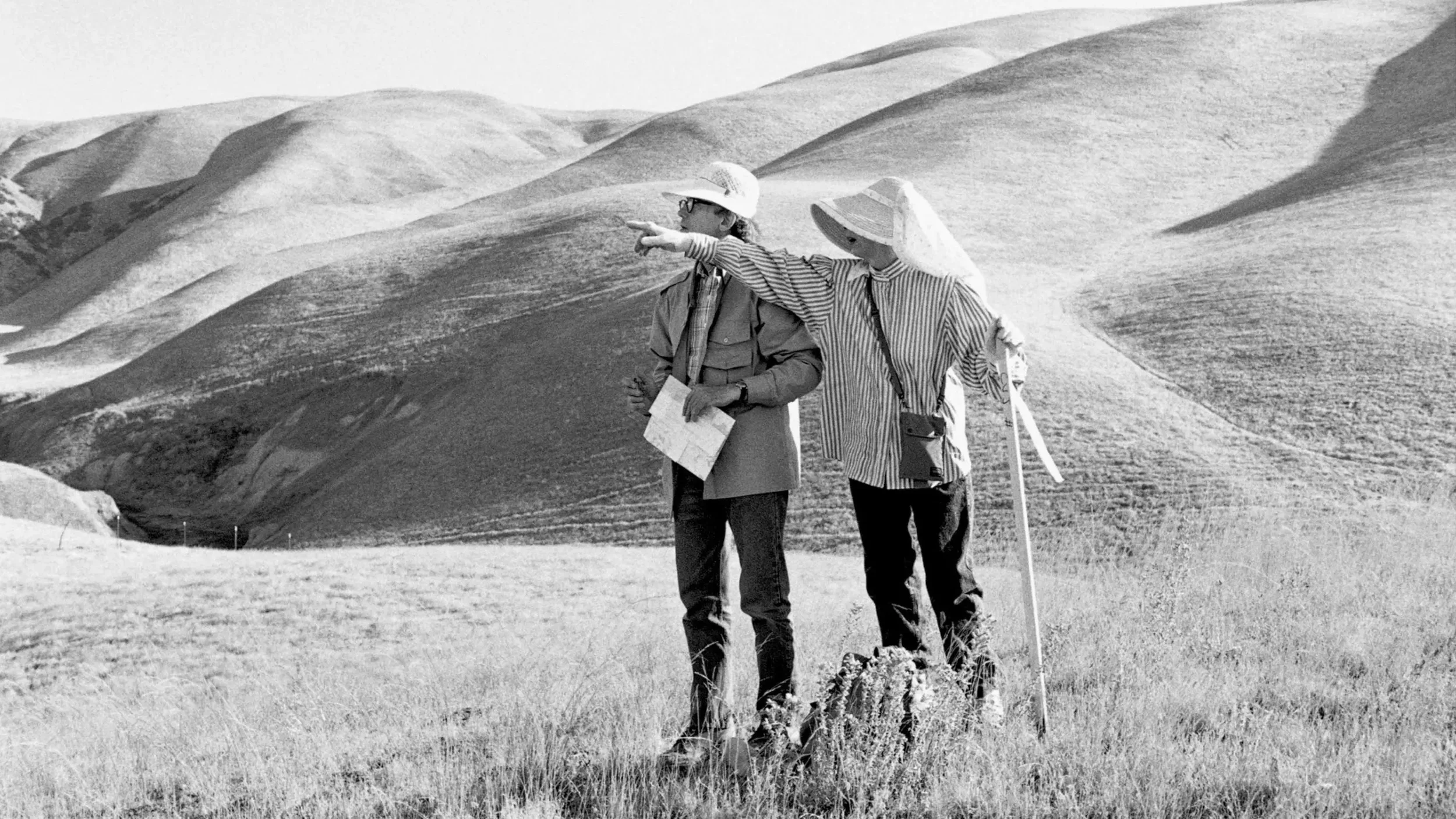
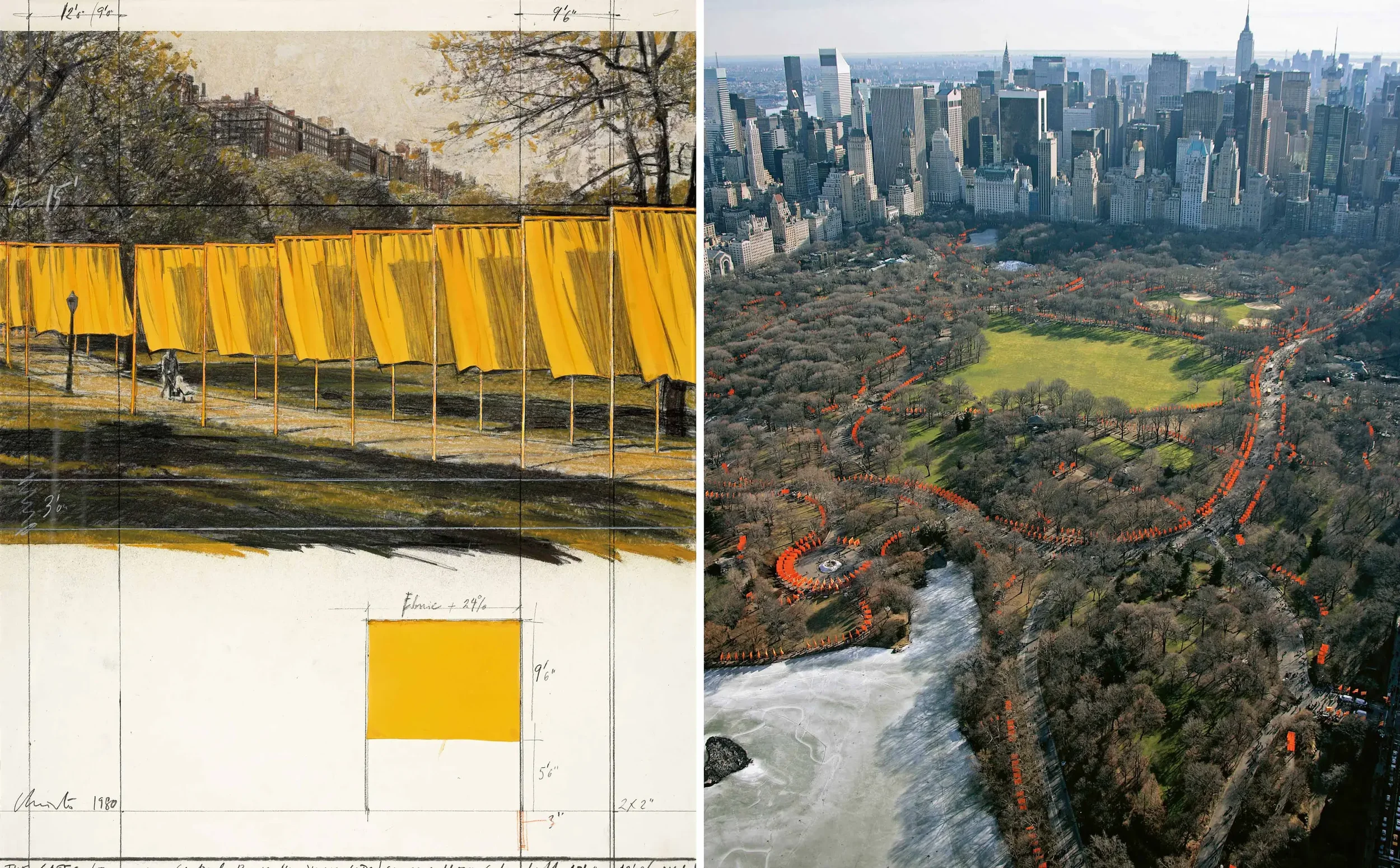
INTRODUCTION AND INTERVIEW: ANYA FIRESTONE IMAGES: CHRISTO AND JEANNE-CLAUDE FOUNDATION PUBLISHED: DECEMBER 7, 2023 UPDATED: MAY 1, 2024“Once upon a time … ” That verbal quartet that opens each fairy tale is perhaps no better suited than to the love story of Christo and Jeanne-Claude, the husband-and-wife artist duo known for their monumental installations. From wrapping iconic landmarks like the Reichstag building in Berlin (Wrapped Reichstag, 1971–1995) to adorning Central Park with saffron-colored fabric (The Gates, 1979–2005), their environmental artworks not only challenged the boundaries of traditional art forms at an exterior level, but also poignantly marked the power of collaboration within the interiority of a romantic relationship. Born, once upon a time, in the same hour, day and year (June 13, 1935), Christo and Jeanne-Claude’s kismet connection was an integral ingredient to creating art as rare as their partnership.
Art history is no stranger to the power-couple phenomenon. Across the centuries, creative duos have marked museum halls with works reflecting their cross-pollination of ethos, profound influence on one another’s work and artistic breakthroughs—or breakups. French sculptors Camille Claudel and Auguste Rodin, Mexican painters Frida Kahlo and Diego Rivera, and American abstract expressionists Lee Krasner and Jackson Pollock all created, dated and collaborated. Yet while each pair met while working toward their individual artistic careers—at a sculpture studio, art school and a joint exhibition, respectively—Christo and Jeanne-Claude came together under different circumstances. Most notably, Jeanne-Claude was not an artist at all.
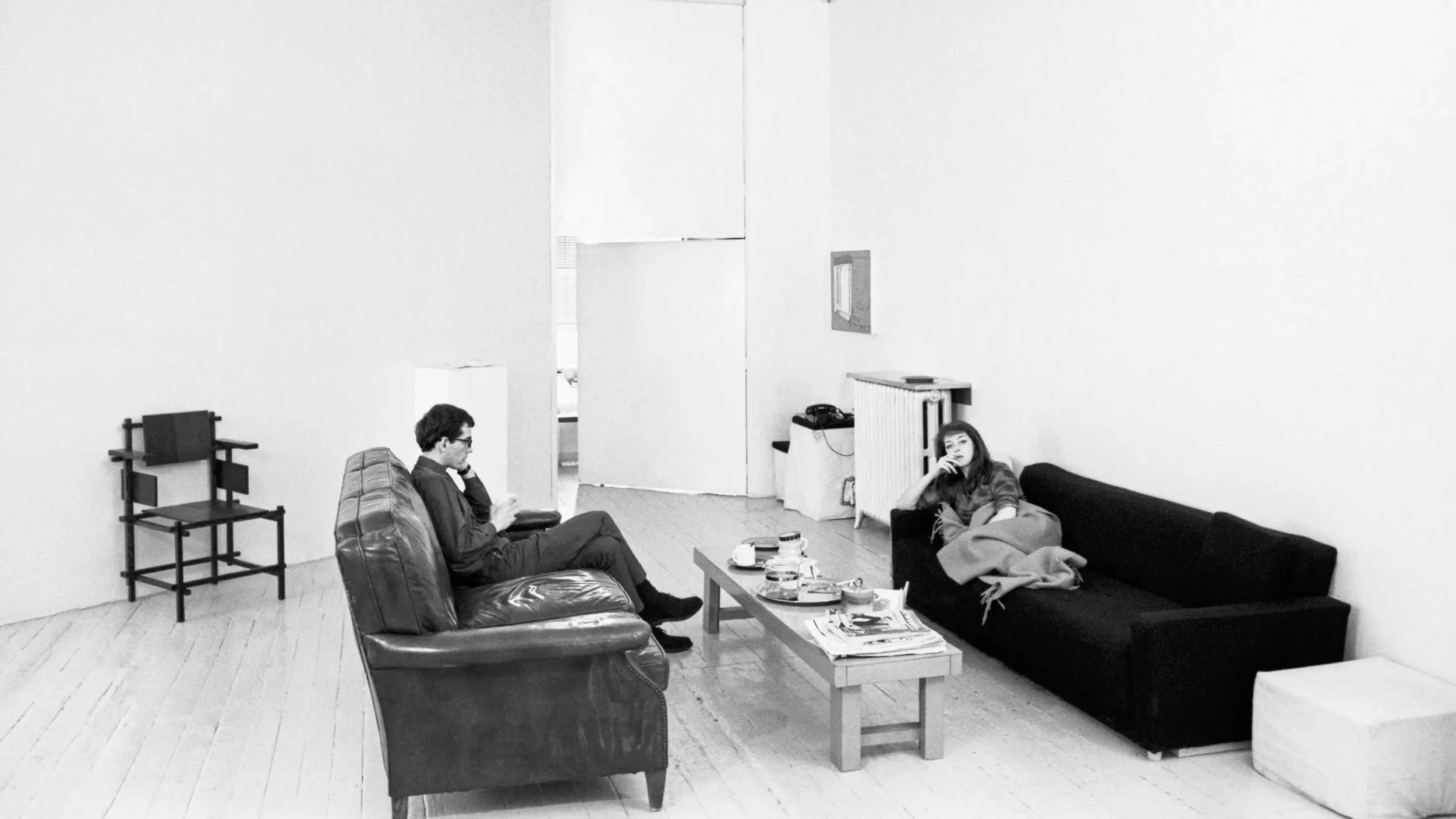
Born into a French military family in Casablanca, Jeanne-Claude Denat de Guillebon met Christo Vladimirov Javacheff in October 1958 in Paris, when he came to paint portraits of her family. He, an artist originally from Bulgaria, had fled Eastern Europe at the onset of the Hungarian Revolution, landing in Vienna, then Geneva and finally Paris, where he created classical portraiture for high society to support himself. After multiple family portraits, the two found themselves in love. “I didn’t know anything about contemporary art. Even less about avant-garde art, I was just in love with a young man who was in love with me,” Jeanne-Claude said in the 2010 film Nomad of Art. She would give life to Christo’s career as a powerhouse artist alongside him. “I became an artist only out of my love for Christo,” she has said in interviews. “If he would have been a dentist, I would have become a dentist.”
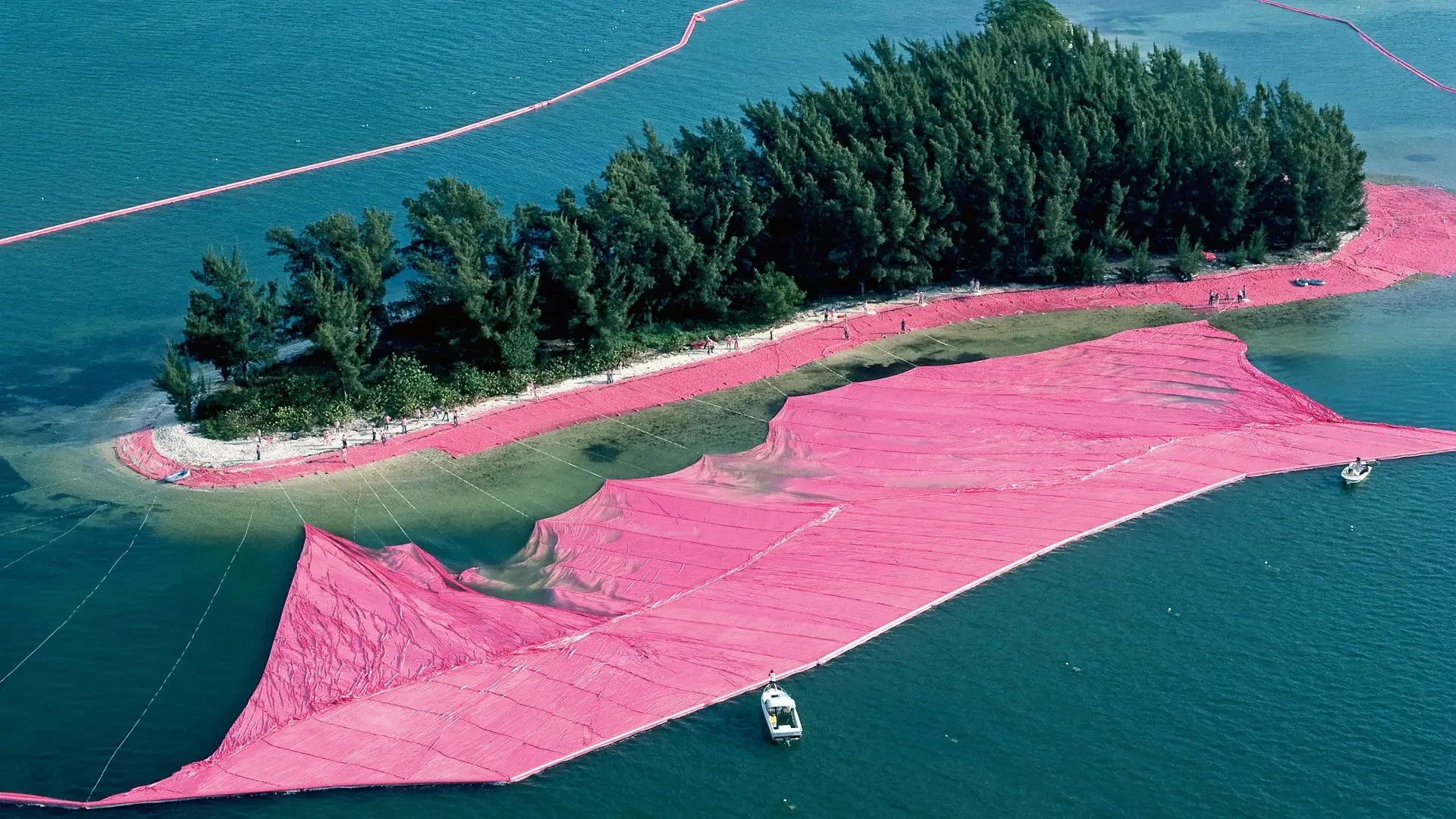
In 1960, the couple welcomed a son, and the following year they birthed Dockside Packages and Stacked Oil Barrels at Cologne harbor, their first art collaboration and temporary outdoor artwork. Since then, their mission to create joy and beauty despite obstacles allowed them to move mountains. Together, they navigated bureaucratic and logistical challenges to get their concepts approved, supported by a vast team of engineers, fabricators, photographers and architects to help bring their visions to life. This interdisciplinary approach not only elevated the scale and ambition of their projects, but also fostered a sense of collective ownership and involvement. 1,200 people worked on the L’Arc de Triomphe, Wrapped (1961–2021), which saw the French monument covered in 270,000 square feet of polypropylene. Surrounded Islands (1980–1983) used 6.5 million square feet of floating pink fabric encircling 11 islands in greater Miami.
Each monumental work took years if not decades to realize, only to exist for a few weeks. Designed to be neither purchasable nor permanent, neither for profit nor to be replicated, their artworks lived as enchanting fairy tales, temporarily altering the landscapes they inhabited.
Despite Christo and Jeanne-Claude passing in 2020 and 2009, respectively, their remaining projects and legacy live on. Every color, detail, sketch and drawing rendered in their lifetimes will be carried out at their behest by their nephews, Vladimir Yavachev and Jonathan Henery, who run their foundation. As this family team continues to finish Christo and Jeanne-Claude’s projects, art and culture theorist Anya Firestone speaks with Vladimir and Jonathan to discuss the couple’s enduring legacy.
Anya Firestone: Let’s talk about the concept of collaboration first. There are some very famous couples and dramas in art history: the tumultuous relationship between Frida and Diego, the surreal experiments of Dalí and Gala. For Christo and Jeanne-Claude, it feels inevitable that we romanticize their relationship. Should we?
Vladimir Yavachev: Christo and Jeanne-Claude were an inseparable couple. Before all else, they enjoyed each other. They were connected physically, psychologically, in every possible way. They loved each other to the end of the world. And that’s the first thing that made their collaboration work. They actually adored each other and would go to the ends of the world for one another. Very few people have a connection like that. When they worked together, this love was essential.
AF: Notably, this love does not follow the cliché of man as artist and woman as his muse. They fused together as one source yet had different strengths. What was the balance of powers like? How did they work individually and together?
VY: Jeanne-Claude was an amazing enabler for Christo. She made so many things happen that wouldn’t have happened without her being there. She was a great negotiator. Once they had to lock Christo in a bus in Japan somewhere because someone didn’t like him. In another, when it was a very male-chauvinistic environment, they didn’t want to talk to Jeanne-Claude. They switched between playing good cop and bad cop. They were smart enough to know who would aggravate whom.
Jonathan Henery: They came together like one field of energy. Their push and pull was really important, and their immense passion to do the work, to make it gorgeous and perfect, came out in that way. They were always fortunate to be moving in the same direction to realize something magnificent and beautiful.
AF: Gilbert and George, another iconic artist couple, have said of their professional and personal partnership: “It’s not a collaboration. We are two people, but one artist.” How did Christo and Jeanne-Claude see themselves? Similarly?
JH: Their projects were by “Christo and Jeanne-Claude.” Each of them contributed to their development and realization, individually and together. They definitely had a partnership rather than a collaboration.
AF: Were they always together?
JH: They would never fly in the same airplane because they always had a baby they were raising or a new art project that had to be realized, and if something did not go well with one of their flights, the other one could finish it. That’s something they did until the very end.
AF: Beyond this collaboration between husband and wife, there is a secondary layer from the work executed by hundreds of people who physically realize the projects, including both of you and your core team. Tell me about this additional collaborative dynamic. Were there ever too many cooks in the kitchen?
VY: Firstly, they didn’t work like normal artists. Everything was done in-house, from the storage and the conservators to the art historians and the making of deals with galleries. That was very unique. We have such a strong core team today because everybody is involved in all aspects. Christo and Jeanne-Claude were always asking for everybody’s opinion as well. It was something collective. We would argue, they would argue and everybody would argue a lot believing in what they thought was the best way to do something, whether it was an exhibition, a gallery show or a project. But we would never take it personally. We were all working towards the same goal. This commitment of the whole team and the people involved is just beyond. It’s also because it is pointless. It has no purpose other than being a work of art. When it is something that is completely pointless, we as humans put much more energy and that energy elevates it even more.
AF: That is an interesting point about pointlessness, especially with art. Historically, art was the exact opposite, it was about making a point. It was serving as branding and propaganda for kings, emperors and churches. Over time, as powers shifted and monarchies crumbled, the rise of the individual artist and the ontology—what it is to be a work of art—shifts and expands. Christo and Jeanne-Claude are responsible for engaging in this shift. Yet, ironically, some of their artworks cover buildings like the Arc de Triomphe, which were built to be didactic, propagandistic, political.
JH: I think Christo and Jeanne-Claude would agree with how you’ve explained it. When they chose a site for a temporary artwork, their artwork inherited all that was inherent with that site. This included the politics of said site.
AF: We can see them covering a politically charged work, turning the subject into freedom by making it de facto obsolete. Did Christo and Jeanne-Claude share the same political views even though they came from different countries?
JH: They did not like to talk about politics. Their work was an expression of freedom. That is why they paid for their work themselves, without any sponsorships or taxpayer funding.
AF: Is there one specific project that summarizes their partnership the best?
JH: We both worked with them on several major projects. Some were realized and some were not. I would say that The Umbrellas (Japan and USA, 1984–1991) really demonstrated how they worked together to realize a monumental artwork. The Umbrellas was installed in Ibaraki, Japan, and in Southern California, simultaneously. They had to literally open 3,100 umbrellas in two countries at the same time, taking into consideration the different time zones. Each of them flew back and forth across the Pacific to supervise the final construction and opening. They often were in planes at the same time, flying in opposite directions.
AF: How did the couple embrace permanently creating that which is temporary?
VY: They were temporary in nature for multiple reasons. For one, they never took commissions from anybody. They did what they wanted to. Second, they had to get permission to do it. You’re borrowing a space. It doesn’t belong to you. It’s also an aesthetic choice that something that is going to be there for only a few days or a few weeks becomes far more precious than something that could stay for centuries. You have to go now. You can’t say, “I’ll go next summer,” because it won’t exist anymore. This also bound our working family. This temporary nature was like a grand adventure.
AF: There is something romantic in this concept of loving something ephemeral.
VY: We have love and tenderness for what does not last. This is what Jeanne-Claude always said. We have love and tenderness for childhood because it does not last. We have love and tenderness for our lives because they do not last. And it is this that gives everything that quality, that rush to go see it all. My favorite quote was from Mike Bloomberg, who was mayor of New York during The Gates, who said, “If you don’t like it, it’s temporary. And if you like it, it’s still temporary.”
AF: Jeanne-Claude passed away in 2009. How was the next decade for Christo without her?
VY: Christo concentrated on work right away. The first project was to organize a memorial which he put so much energy into. He really concentrated on the work, and I think mostly because that’s what she would have wanted him to do.
JH: That is who he was. Every day he woke up and he was thinking about his work. What else was he going to do? We did our best to support him so that he could continue, even though he was missing something very important.
VY: Christo was in a hurry. He wanted them done. It was always a race against time with Christo, not just because he had these ideas but because he wanted to complete them. He wanted to see it.
AF: You work with so many people who are passionate about finishing their projects today. Do you feel as though the couple transferred their passion to you?
JH: That’s half of it because all of the artistic decisions were done in his lifetime. If I remember correctly, he had even ordered the fabric for the Arc de Triomphe. It was just a matter of executing this with a very smart team of construction workers and engineers. This goes for the other project we hope we’ll see one day in Abu Dhabi. Every color, every bit of it was completely chosen by the artists decades ago.
VY: It’s not a job for me. It’s my life. I could be bored with a family business, but I’m not. Their passion and enthusiasm were some of the most contagious things.
JH: The energy you got from the two of them, you saw it in the projects. Once it was built, the stress level goes down and the joy is just so great. You would see them, walking hand in hand through the projects. You could see the glow in their faces.